
Prepare a custom hydrographic artwork brief with repeat size, intended part, color reference and revision control before discussing printing and plate making.
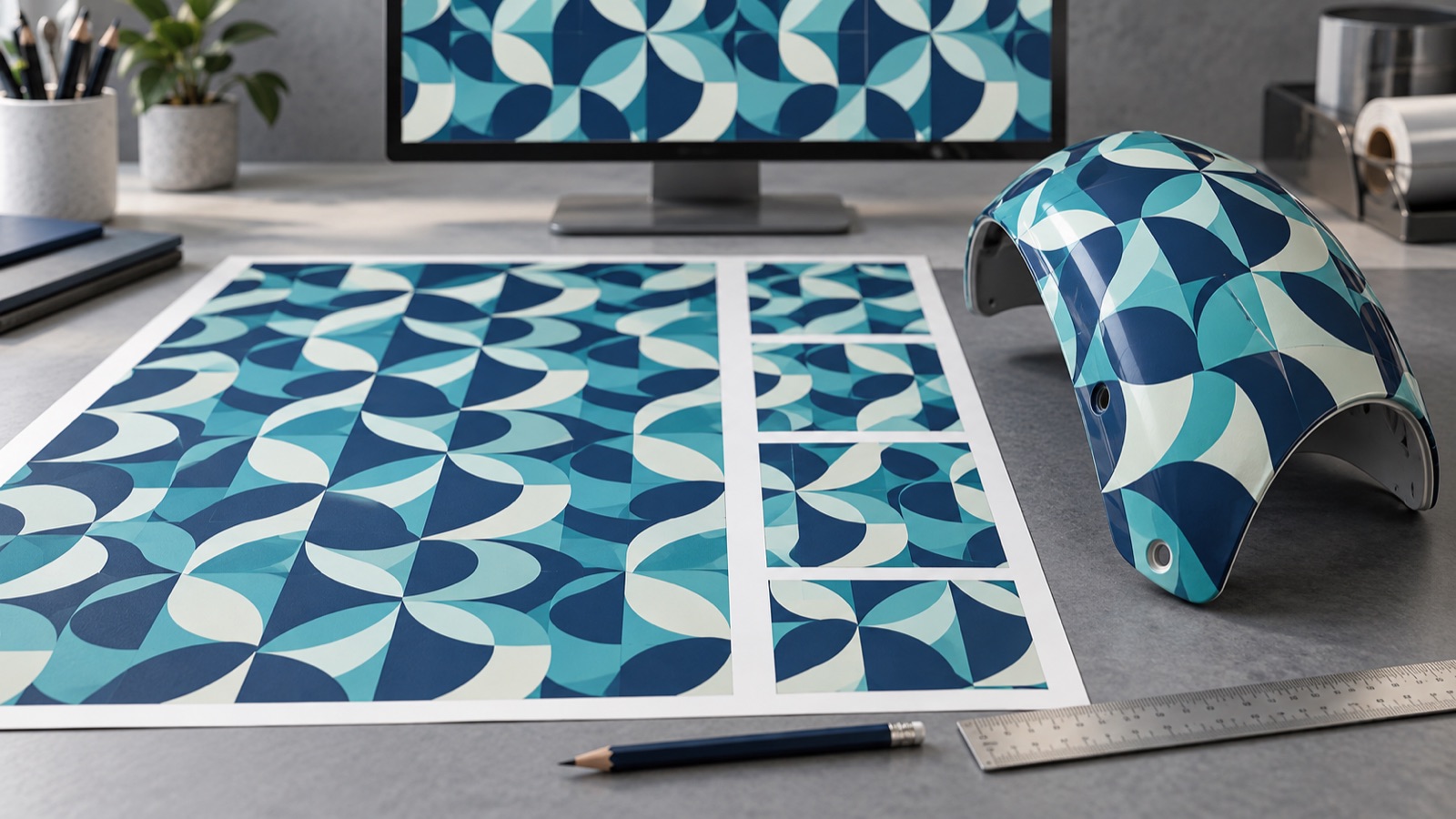
Illustration generated with AI for this buying guide; not a supplied-product or customer-project photograph.
A reference picture can show a design direction, but it is not always ready for film printing. Before discussing a custom hydrographic pattern, turn that picture into a brief: what should repeat, at what size, on which part, and which version will be approved? This gives the artwork review a clear purpose.
CAIYIDE's pattern development, printing and plate-making service asks customers to provide an Adobe Illustrator design file for custom requirements. If you only have a photograph or concept, explain that at the start and ask what development work is needed. Do not assume a screenshot can be enlarged without further preparation.
Define the repeat before discussing the full roll
The repeat is the artwork unit that is repeated to form the overall pattern. Identify its intended physical width and height and show how neighboring copies meet. Include a wider preview with several repeats, not only the single tile, so obvious seams or unexpected bands can be discussed before printing.
Then show the repeat at the intended scale on an outline or photograph of the actual part. A pattern that reads clearly on a large sheet may lose its main feature on a narrow face. FinishTEK's custom-pattern guidance identifies pattern scale and precise logo placement as design considerations; the practical point for a buyer is to describe the required result before assuming it is repeatable.
Separate an all-over pattern from a positioned logo
An all-over texture and a logo that must sit in one exact location are different briefs. Mark any required orientation, protected logo area or alignment point on the part drawing. Ask the processing team to assess the placement requirement. Do not promise your own customer that a flat design will land unchanged at every edge and curve.
For original art, provide the editable source and identify the artwork you are authorized to use. Where a supplied design contains third-party graphics or type, resolve the relevant permissions before production. A reference used to discuss style should not be mistaken for permission to reproduce another company's design.
Send a compact artwork package
- Source file: editable design and any supporting assets requested during review.
- Scale: dimensions of the repeat and a multiple-repeat preview.
- Part: image, dimensions, substrate and the important visible surfaces.
- Color intent: the reference to compare, plus the intended base and finish for the sample.
- Commercial scope: estimated film quantity, delivery country and the intended production route.
- Version: one clearly identified current file, with previous versions kept separate.
Confirm file settings with the supplier; this guide does not impose a universal resolution, color-profile or cylinder-size specification. Those details must fit the actual printing process and job.
Approve the design and the application separately
Use the artwork proof to check layout, repeat, spelling and dimensions. Use the agreed physical sample to assess the appearance on the part. Record any change to scale, color direction or the component itself, and identify which revision is approved before plate making or production is committed.
If an existing graphic or designer film already meets the need, compare that option before commissioning new artwork. For a custom project, send your artwork brief to CAIYIDE. State whether you need artwork review, a new repeating pattern, plate making or film supply so the quotation covers the work you actually need.