
Compare hydrographic film quotations on the same basis: pattern, roll width, length, order unit, usable layout and separately listed development or shipping costs.
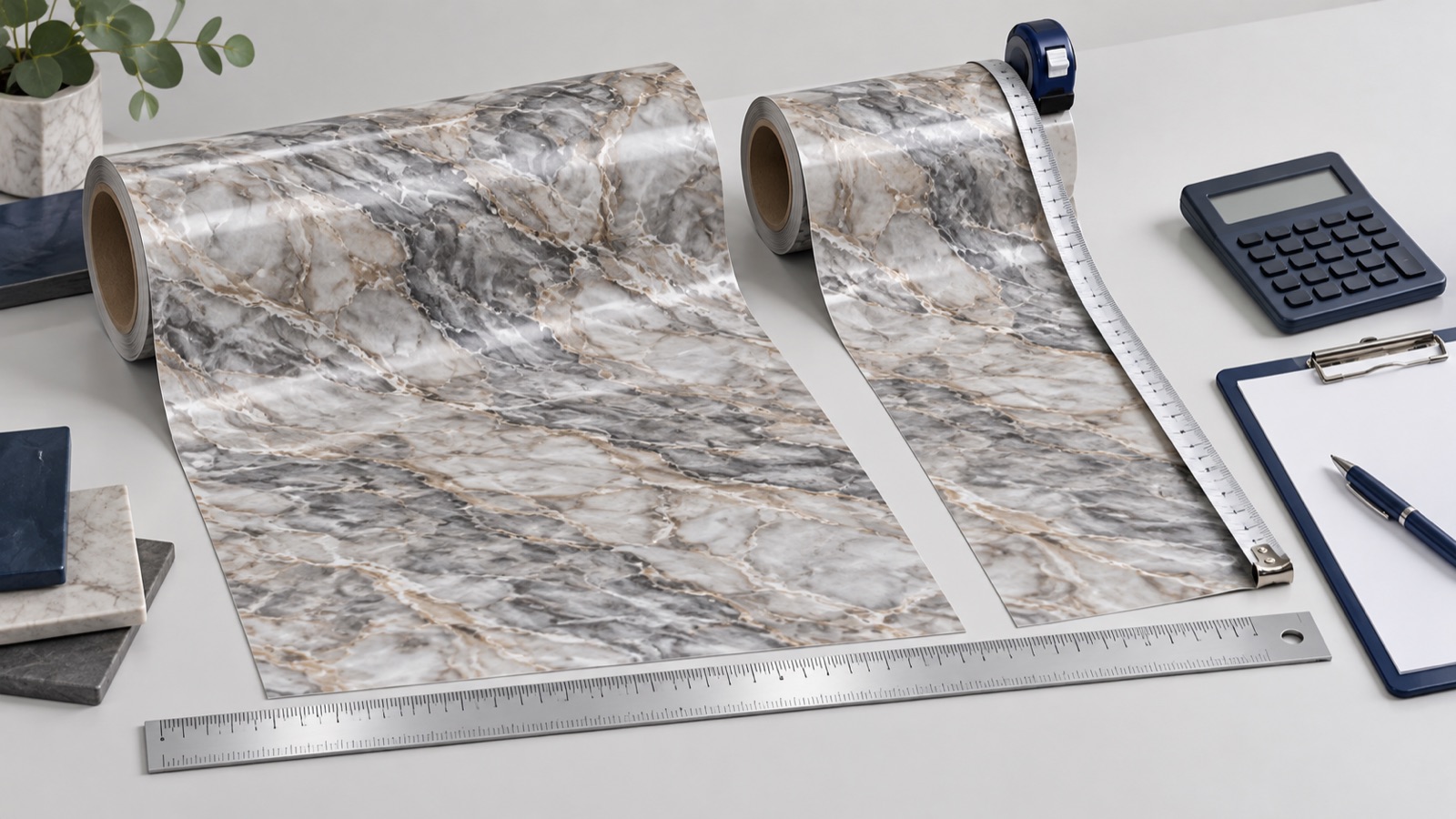
Illustration generated with AI for this buying guide; not a supplied-product or customer-project photograph.
A low price per “meter” is not enough to compare two hydrographic film offers. One quote may use a length unit, another an area unit, and the roll widths may differ. Before deciding which offer is more suitable, put the pattern, width, quantity and included work on the same basis.
For CAIYIDE, start with the film supply service and an actual pattern reference. Confirm the current width, availability and selling unit for that reference. Do not infer a roll specification from the proportions of a website thumbnail.
Write the unit out in full
Ask whether the quantity and price are per linear meter, square meter, sheet or complete roll. If it is a roll, ask for both width and length. Record the currency and whether packaging, freight or other charges are included. These are quotation questions, not assumptions about a supplier's standard terms.
For a rectangular length of film, nominal area is width multiplied by length when both dimensions use the same unit. For example, an illustrative 0.5-meter-wide length measuring 20 meters has a nominal area of 10 square meters. This is arithmetic only, not an advertised CAIYIDE roll size or a promise of finished-part yield.
Keep film area separate from decorated-part output
Nominal film area is not the number of saleable parts it will produce. The cutting layout, part shape, pattern orientation and agreed process allowance affect how the film is used. If you need a cost per finished component, ask the processor to assess the actual layout and production conditions rather than dividing film area by the visible face of the part.
For a directional woodgrain design, for example, rotating the cut piece merely to save space may conflict with the appearance brief. Link the quantity estimate to the required pattern direction and sample result.
Separate recurring material cost from one-time work
- Film supply: named pattern, agreed width, selling unit and quantity.
- Custom development: artwork changes, plate making or trial work, where included in the scope.
- Samples: what is being supplied and the related shipping arrangement.
- Delivery: destination, packaging and the charges included in the quotation.
- Reorders: which quoted items recur and which need confirmation again.
A standard catalogue pattern and a newly commissioned design should not be compared as if they involve identical work. CAIYIDE's custom pattern service provides a separate starting point for discussing development and printing requirements.
Use a short comparison record
Put each offer on one line with: pattern and version; film width; quantity and unit; price and currency; included work; shipping basis; sample status; and quotation validity. If an item is missing, leave it marked “to confirm” rather than filling it with an assumption.
Send the same part image, substrate, pattern reference, estimated quantity and delivery country with each request. This helps the supplier identify differences that matter. Ask for clarification if an offer changes the pattern, width or included services; a price comparison is only useful when the scope is comparable.
Request a film quotation from CAIYIDE with the required unit written out. If your quantity is still a part count rather than a film area, say so and provide the geometry for review. You can also review standard versus custom pattern options before deciding which type of quotation to request.