
Separate film selection, decorated-part appearance and performance checks with a practical sample approval record before a bulk hydrographic film order.
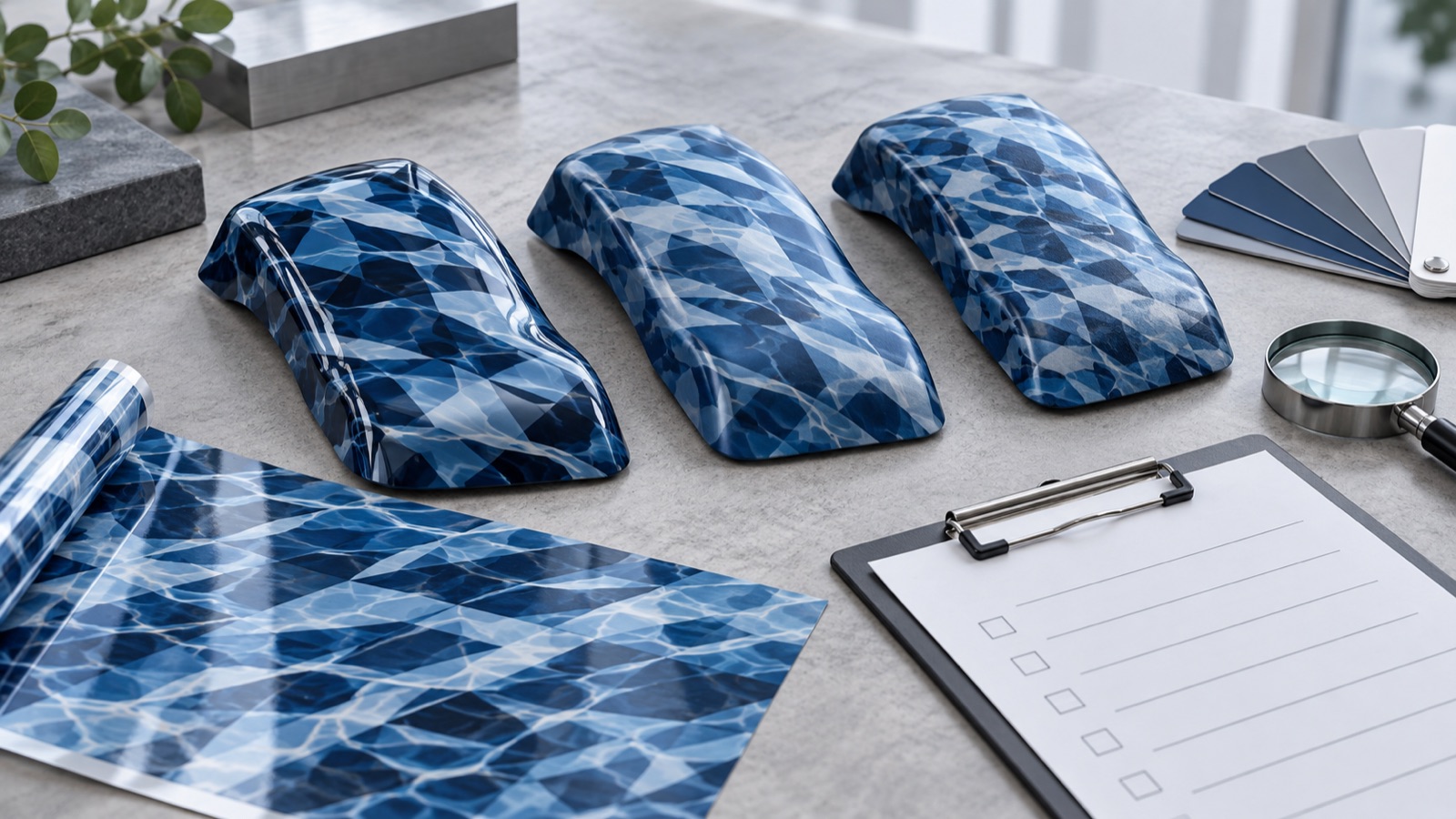
Illustration generated with AI for this buying guide; not a supplied-product or customer-project photograph.
A sample request is more useful when it says what the sample must answer. Are you choosing a pattern, checking its appearance on a shaped part, or confirming a finished component against a requirement? Those are different decisions. A free film swatch, where available, should not be treated as approval of every stage of a production process.
CAIYIDE's film supply information describes samples and standard-film ordering. Confirm the current sample arrangement, shipping and exact reference when you inquire. If you need a decorated component rather than loose film, state that separately so the scope can be reviewed.
Use three approval gates
- Film reference: identify the pattern, intended scale and the supplied sample.
- Decorated-part appearance: review the reference part, base color, pattern direction, important faces and intended finish.
- Application requirements: agree which checks, methods and acceptance criteria are needed for the actual use.
Keep the result for each gate separate. A visually approved sample is evidence of the agreed appearance, not automatic proof of adhesion, wear resistance, outdoor life or any certification. Where performance matters, the buyer and processing team need to specify the relevant test and the finished system to be evaluated.
Choose a representative part, not only an easy flat coupon
A flat swatch helps compare patterns and colors. A part with the important curves, recesses and edges helps answer a different question: what does the design look like on the intended shape? Tell the team which faces are customer-visible, whether parts form a matching set, and where a visible transition would be unacceptable.
If sampling every shape is not practical, list the shapes covered by the representative sample and the ones still open. A sample of a small flat cover should not silently approve a deeper or more complex housing.
Write an approval record that can travel with the order
- Buyer project or part reference, substrate and revision.
- Film pattern reference and sample identifier.
- Photographs showing the whole part and the areas under discussion.
- The agreed appearance, including direction and intended sheen.
- Any separately specified performance check and its result.
- Approved, changes required or not yet assessed for each item.
- The approving person and date, with a physical reference retained where practical.
Keep a requested change specific. For example, identify the face where the motif should appear smaller instead of writing only “improve the pattern.” Avoid changing the film, substrate and finish at the same time without recording the revision; it becomes difficult to know which combination was accepted.
Close open points before the bulk purchase
Make sure the quotation references the approved version, quantity and delivery requirements. Agree who retains the reference sample and whether the first production output needs an additional review. If the artwork, part design or finishing system changes, ask whether the previous approval still applies.
You can start with a named pattern such as Colorful Mandala or browse the film catalogue. Send that reference with the part image and the decisions your sample must resolve. Request a film sample or discuss your approval plan; CAIYIDE can review whether you need film supply, custom development or application support.